From 2027, Belgium’s indoor air quality requirements will gradually become mandatory for enclosed spaces open to the public. Do you run a shop, hospitality business or another venue that welcomes visitors? Now is a good time to prepare.
The approach involves three steps: measuring air quality, carrying out a risk assessment and drawing up an action plan where needed. But what does that mean in practice? Here are the main changes and how to get started.
The legislation covers enclosed spaces accessible to the public, including hospitality venues, shops, sports facilities and cultural institutions.
The requirements will be phased in from 1 January 2027. A Royal Decree will determine which categories must comply first. The scope will then expand, with all relevant spaces covered by the end of 2037.
Workplaces already have indoor air quality obligations under Belgium’s Code on Well-being at Work. It is therefore important to check which rules apply to your situation. You can find more information on this page from the Belgian Federal Public Service Health.
Reliable measurements are the starting point. A suitable air quality monitor helps you understand what is happening in your space, including during busy periods.
A CO₂ monitor, for example, helps you assess whether ventilation is sufficient for the number of people present and their activities. Your choice of device, its positioning and its maintenance all affect how reliable and useful the measurements are.
Keeping visitors informed is also part of the legal framework. The Royal Decree of 12 May 2024 sets out the requirements for measuring equipment and the provision of information.
Looking for a device that meets these requirements? Arizo offers products to help you monitor and improve air quality.
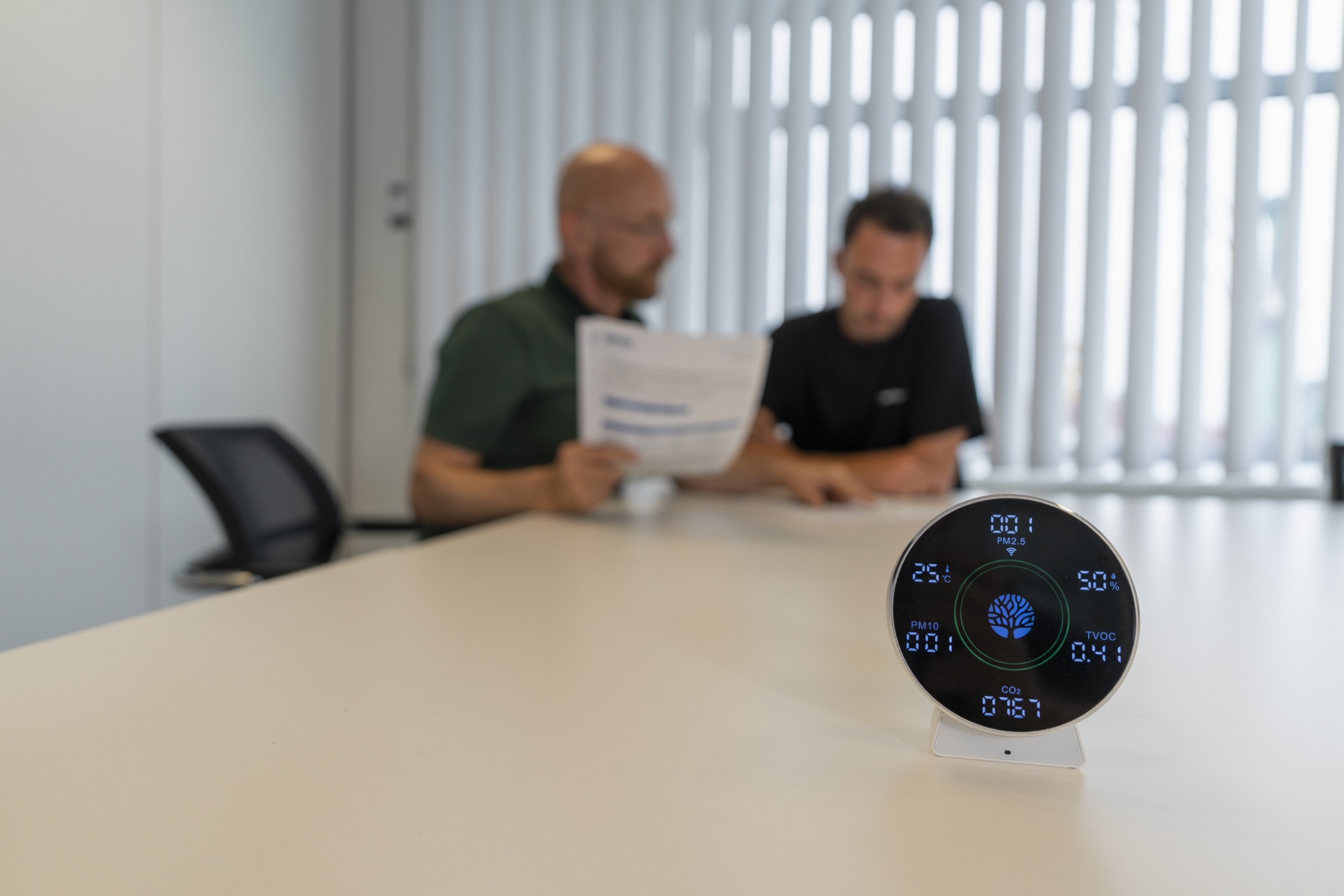
Reliable measurements are the starting point. A suitable air quality monitor helps you understand what is happening in your space, including during busy periods.
A CO₂ monitor, for example, helps you assess whether ventilation is sufficient for the number of people present and their activities. Your choice of device, its positioning and its maintenance all affect how reliable and useful the measurements are.
Keeping visitors informed is also part of the legal framework. The Royal Decree of 12 May 2024 sets out the requirements for measuring equipment and the provision of information.
Looking for a device that meets these requirements? Arizo offers products to help you monitor and improve air quality.
Measurements form the basis of a well-founded indoor air quality risk assessment. They show the actual conditions and help identify problems. Continuous monitoring also reveals changes throughout the day or as occupancy levels vary.
In the risk assessment, we combine measurement data with information about the space, ventilation and potential sources of pollution. Are employees working in the space? We also include their experiences, for example through an employee survey. This helps us connect measured values with observations from everyday use and determine which measures are needed.
The result is a practical assessment: you know where the issues are and what needs attention. This guide from the Belgian Federal Public Service Health explains which elements should be covered.
Does the risk assessment show that improvements are needed? Record them in an action plan, with specific measures and a schedule.
These might include adjusting the ventilation, maintaining installations or reducing sources of pollution. Depending on the problems identified, air purification may complement ventilation.
Taking further measurements after these changes helps you check whether they have achieved the intended result. This allows you to keep track of indoor air quality and make further adjustments where needed.
Which measurements do you need? How do you assess the results? And which measures are right for your building and activities?
Arizo helps you carry out an indoor air quality risk assessment. We help you assess air quality, interpret measurement results and turn the findings into practical advice.