
Poor air quality means that there are polluting substances in the air you breathe. This can range from visible pollution such as smoke and dust to invisible pollution from carbon monoxide, volatile organic compounds (VOCs) and particulate matter.
To assess and monitor air quality, governments use the Air Quality Index (AQI). It gives an indication of air quality by measuring various pollutants and comparing them with established standards.

Poor air quality means that there are polluting substances in the air you breathe. This can range from visible pollution such as smoke and dust to invisible pollution from carbon monoxide, volatile organic compounds (VOCs) and particulate matter.
To assess and monitor air quality, governments use the Air Quality Index (AQI). It gives an indication of air quality by measuring various pollutants and comparing them with established standards.
Although air quality in Belgium is generally heading in the right direction, a large part of the population still faces air quality levels that exceed the guidelines of the World Health Organization (WHO).
There are clear differences at regional level: in Flanders, exposure to particulate matter is highest, in the Brussels-Capital Region this is the case for nitrogen dioxide, and in Wallonia for ozone.
Compared with other EU countries, Belgium performs relatively poorly in terms of air quality, and this for most of the pollutants studied. Yet the consequences of poor air quality are considerable: exposure to pollutants such as particulate matter, nitrogen dioxide and ozone contributes significantly to health problems and premature death.
Indoor air quality is often worse than outdoor air quality. Indoor spaces are often poorly ventilated, causing harmful substances such as CO, formaldehyde or other solvents and particulate matter to build up to unhealthy concentrations.
When you breathe in polluted air, it enters your lungs through your nose or mouth. Via the alveoli, the gases and very fine dust particles dissolve into your blood and end up throughout your body. Your liver and kidneys process the chemicals and eventually remove them from your body.
Chemical substances can cause various health effects. Sometimes these effects are acute. Think, for example, of ammonia and carbon monoxide, which disrupt breathing almost immediately.
But most substances have no immediate effect and only cause serious conditions in the long term, such as respiratory problems, asthma, allergies, autoimmune diseases, Parkinson’s disease, deafness, impaired vision, paralysis, brain damage, dementia, cancer, leukaemia and organ failure.
Because symptoms only appear gradually and are often mistaken for signs of ageing, they are rarely linked to inhaling chemical vapours.
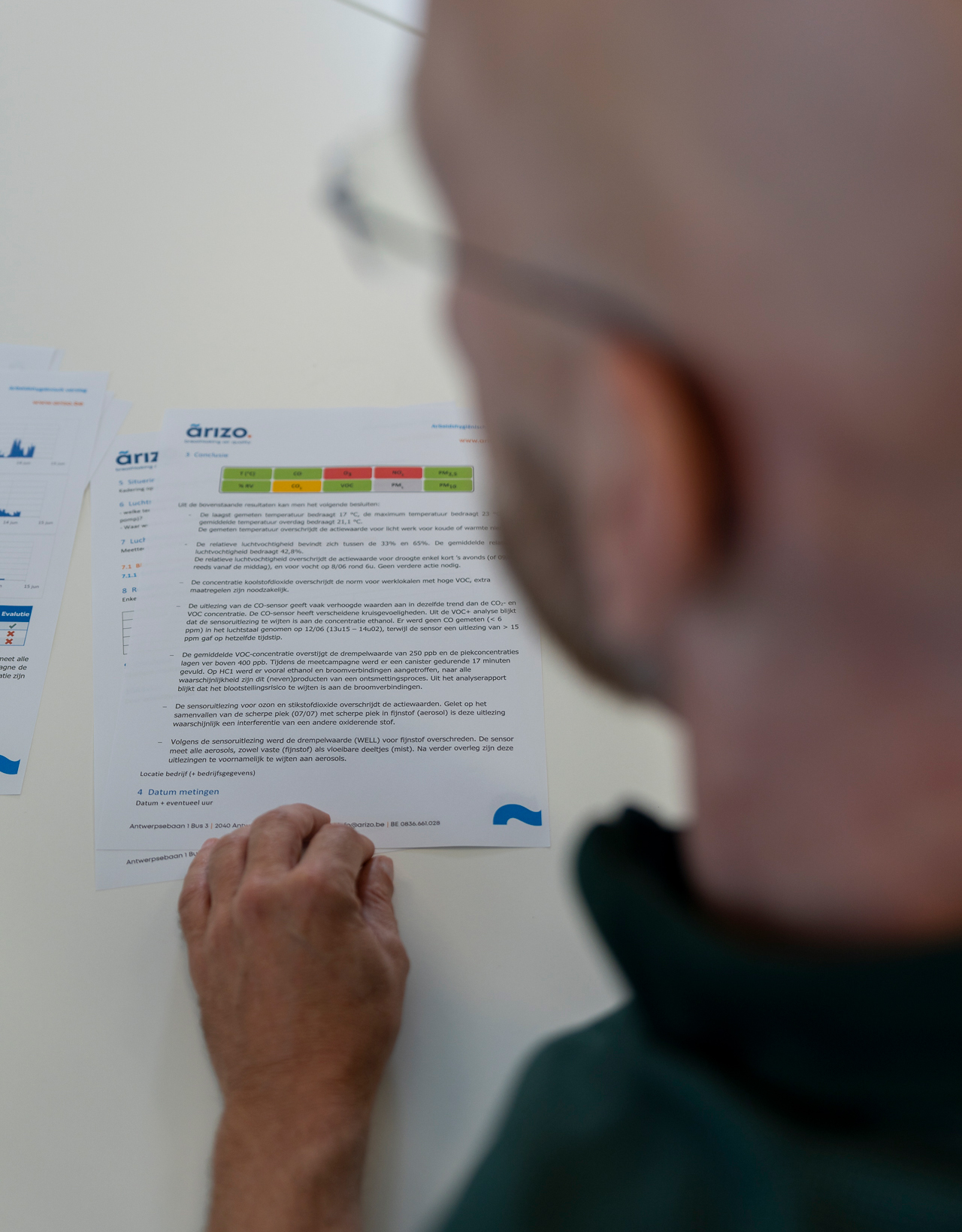
Indoor air quality is often worse than outdoor air quality. Indoor spaces are often poorly ventilated, causing harmful substances such as CO, formaldehyde or other solvents and particulate matter to build up to unhealthy concentrations.
When you breathe in polluted air, it enters your lungs through your nose or mouth. Via the alveoli, the gases and very fine dust particles dissolve into your blood and end up throughout your body. Your liver and kidneys process the chemicals and eventually remove them from your body.
Chemical substances can cause various health effects. Sometimes these effects are acute. Think, for example, of ammonia and carbon monoxide, which disrupt breathing almost immediately.
But most substances have no immediate effect and only cause serious conditions in the long term, such as respiratory problems, asthma, allergies, autoimmune diseases, Parkinson’s disease, deafness, impaired vision, paralysis, brain damage, dementia, cancer, leukaemia and organ failure.
Because symptoms only appear gradually and are often mistaken for signs of ageing, they are rarely linked to inhaling chemical vapours.