Since the introduction of new indoor air quality regulations, one thing is clear: CO2 plays a crucial role in healthy indoor environments. But how do you know if you’re choosing the right device? The authorities have published a practical guide with a clear checklist.
Below, we summarise the key points and show you how to ensure your device meets the requirements.
CO2 is a strong indicator of indoor air quality. The higher the CO2 concentration, the greater the likelihood of insufficient ventilation and the higher the risk of aerosol transmission.
With a reliable CO2 meter, you can:

The government defines several clear criteria. These are the most important:
Always choose a device that directly measures CO2, such as one with an NDIR sensor.
Indirect measurements (« CO2 equivalent ») are not sufficiently reliable.
Every sensor ages and must be calibrated. Preferred options are:
Regular external lab calibration is not recommended.
A reliable device measures at least up to 2000 ppm, preferably up to 5000 ppm.
The measurement error should remain within a maximum of 10%.
A good CO2 meter:
This allows you to act immediately when needed.
Also consider:
Many devices on the market do not meet these criteria. Especially those using « CO2 equivalent » or lacking calibration options can lead to incorrect conclusions.
Our device:
In short: you can be confident that your device complies with current regulations and provides reliable data.
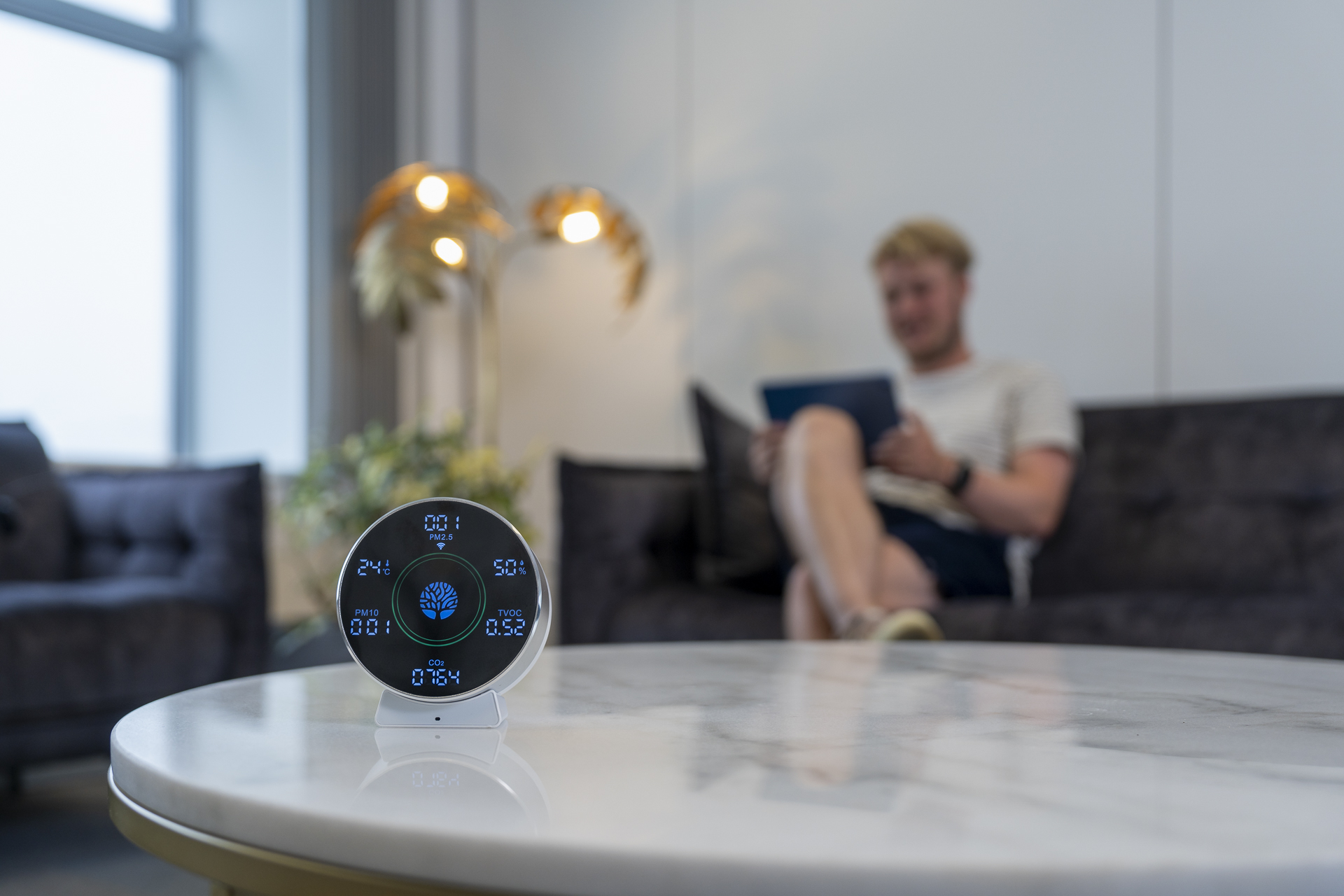
A CO2 meter is not a gadget, but an essential tool for healthy indoor air. By following the official checklist, you make an informed choice and avoid unreliable measurements.
Not sure about your current device or looking for a reliable solution? We’re happy to help.
Source: Volksgezondheid Veiligheid van de Voedselketen Leefmilieu


 Portal


